Penerangan
The connection between environmental initiatives, culinary synthesis, and design strategies lies in how we conceptualise, blend, and communicate the elements of sustainability to make a lasting impact on a community.
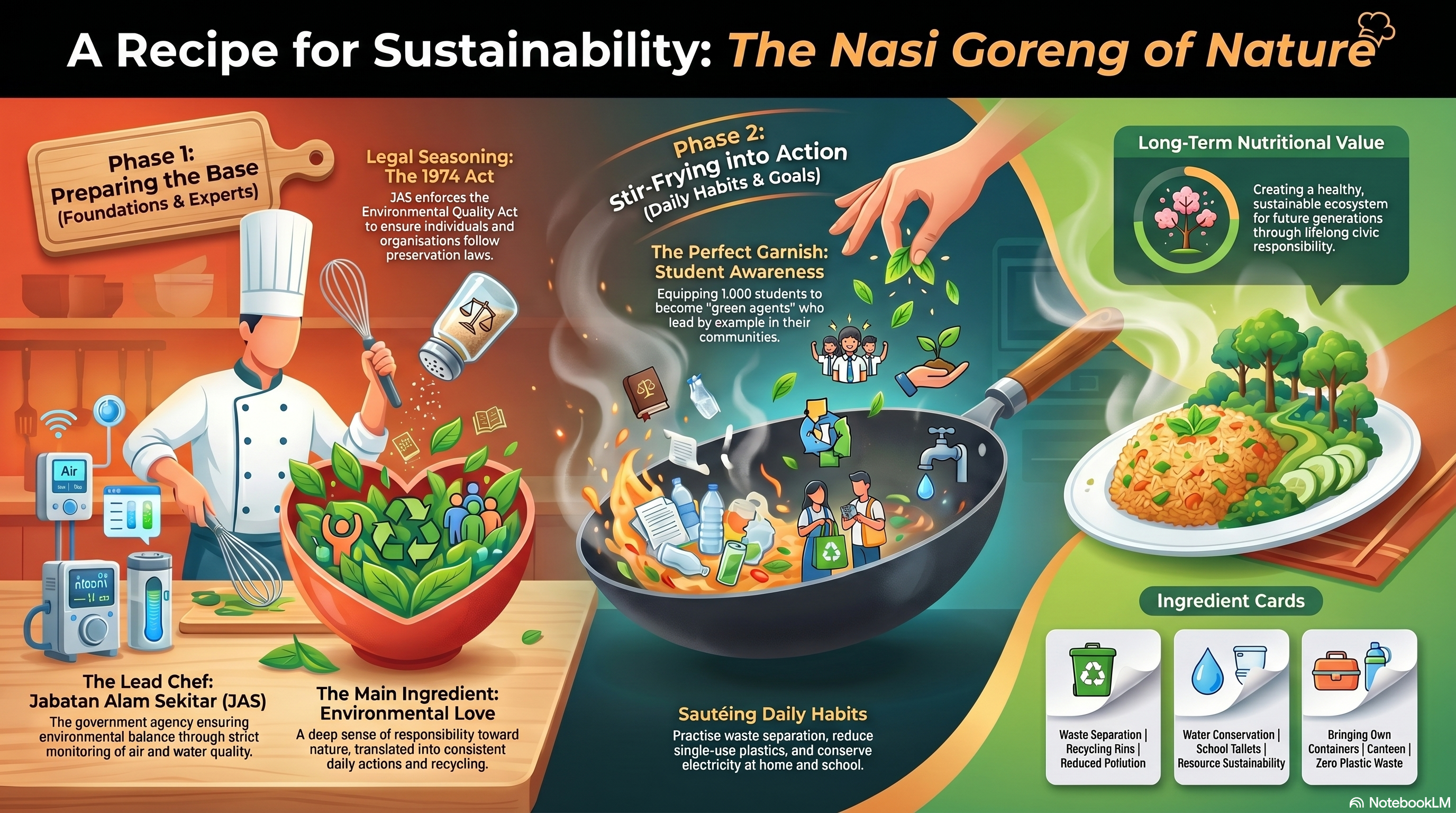
1. The Culinary Connection: Sustainability as a 'Recipe'
The concept of 'Culinary Synthesis' (such as making Nasi Goreng) serves as a powerful metaphor for environmental stewardship
A Synthesis of Stakeholders: Just as Nasi Goreng requires a harmonious blend of diverse ingredients to succeed, effective environmental action requires a collaborative mix of partners. At school, this is illustrated by the partnership between the Department of Environment (JAS) Kelantan, school administrators, teachers, parents, and students
Essential Ingredients of Stewardship: Each distinct daily practice serves as a critical 'ingredient' in the overall recipe for a sustainable future. These ingredients include recycling waste (such as paper, plastic, and glass), bringing reusable food containers and water bottles to reduce single-use plastic, planting trees, and reducing food waste.
Long-Term Nourishment: The ultimate goal is to nurture a culture of environmental love ("Cintai Alam Sekitar") that transitions from a single school project into a lifelong civic habit, nourishing the ecosystem for generations to come.
2. The Design Connection: Making Sustainability Visually Catchy
To translate dry policy, regulatory acts (like the Environmental Quality Act 1974), and complex recycling concepts into student-friendly actions, we must apply Dynamic Design Strategies.
Eye-Catching Visual Media: By utilizing bold colours, interactive elements, and clear layouts, environmental messages become far more engaging and memorable. This is particularly critical when designing materials for younger generations, who represent the future heirs of our environment.
Transforming Education into Action: Applying design concepts to educational campaigns (such as making slides and infographics more interactive) ensures that civic responsibilities and waste-segregation steps are easily understood. This makes "green habits" look appealing, approachable, and actionable rather than tedious.
By merging these disciplines, we can view environmental sustainability not merely as a set of rules, but as a carefully crafted recipe that is communicated through vibrant, engaging design to inspire a healthier, greener community.